Chichen Itza: Must-See Structures Beyond the Main Pyramid
Escape the crowds at Chichén Itzá. Our expert guide maps out El Caracol, Chichen Viejo, and the Sacred Cenote with first-hand navigation tips.
We’ve all seen the photos of El Castillo—the towering, symmetrical pyramid that dominates every postcard of the Yucatán. But after spending countless hours navigating the limestone paths of this major archaeological site, located in the Yucatán Peninsula within Yucatán state and Tinúm municipality, I can tell you that if you only stand in the main plaza, you’re missing the heartbeat of the place.
Chichén Itzá is massive, sprawling over four square miles. The city was founded near two natural sinkholes, or cenotes, which provided essential water in this arid region. Most visitors bake in the sun in front of the main pyramid and head for the exit by noon, exhausted by the heat and the crowds. To truly appreciate Mayan architecture, you have to push into the jungle-fringed corners of the site where the shadows are long and the stone carvings tell a much darker, more intricate story. The monuments of Chichen Itza influenced architecture and culture across the entire Yucatan cultural zone for centuries.
Chichen Itza is one of the most visited archaeological sites in Mexico, attracting many visitors—an estimated 9.9 million in 2025. Many arrive via tour buses from Cancun and the Riviera Maya, and hotels such as Mayaland provide accommodations nearby. The site is open to visitors every day from 8 am to 5 pm, with the last entrance at 4 pm.
Here is your boots-on-the-ground guide to the structures that actually define this site, beyond the “big one.”
Introduction to Chichén Itzá
Chichén Itzá stands as one of the world’s most iconic archaeological sites, drawing travelers from every corner of the globe to the heart of the Yucatán Peninsula. This pre-Hispanic city, once a major focal point of the Maya civilization, is a place where history, myth, and monumental architecture collide. Located between the modern cities of Cancun and Merida, Chichén Itzá is easily accessible for day trips, making it a must-see destination for anyone visiting Mexico.
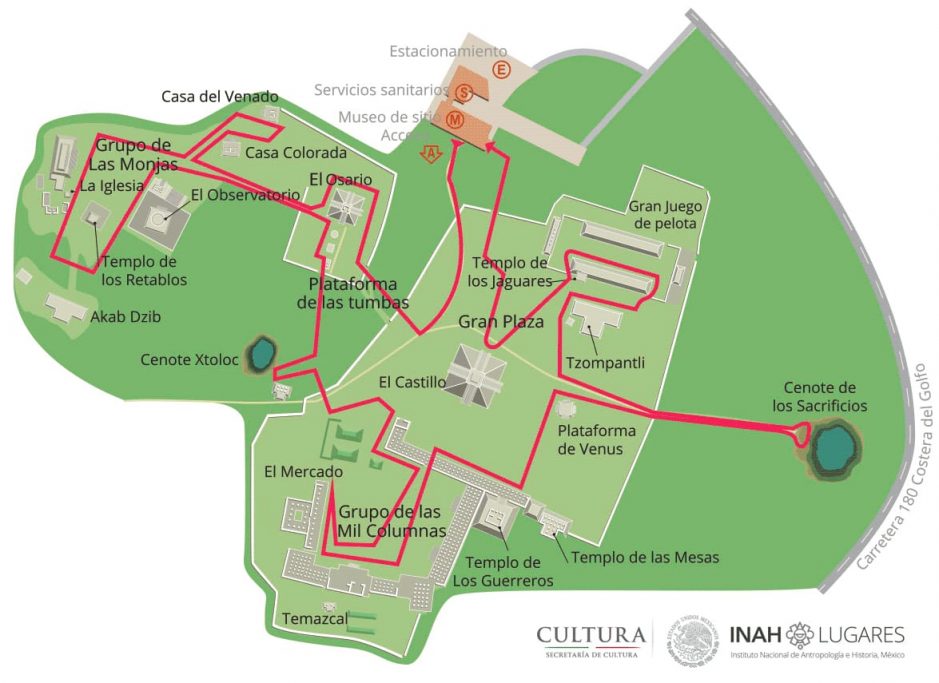
When you plan your visit to Chichén Itzá, it’s essential to get a sense of the site’s vast layout. Chichen Itza maps are invaluable for navigating the ceremonial center and ensuring you don’t miss the most significant buildings. While El Castillo—the famous pyramid—dominates the skyline, the site is home to a wealth of other structures, including El Caracol (the ancient observatory), the Great Ball Court, and a network of temples, plazas, and sacred spaces. Each building tells a story, revealing the ingenuity and spiritual depth of the Maya people who once called this city home.
Whether you’re a history buff, an architecture enthusiast, or simply curious about the mysteries of the ancient world, Chichén Itzá offers something for every visitor. Guided tours departing from Cancun, Merida, or Valladolid can help you make the most of your time, providing expert insights and convenient transportation. With a good map in hand and a sense of adventure, you’ll be ready to explore the ruins, uncover hidden corners, and experience the magic of Chichén Itzá for yourself.
History of the Ancient City
The story of Chichén Itzá is as layered and intricate as the carvings on its ancient stones. Founded in the early portion of the Classic period, this city rose to prominence as a ceremonial center and trading hub in the northern Maya lowlands. Its strategic location near cenotes—natural limestone sinkholes that provided fresh water—made it a vital settlement for the Maya people, who flourished here for centuries.
During the Terminal Classic and into the Postclassic period, Chichén Itzá became a melting pot of cultures. Influences from central Mexico, particularly the Toltecs, are evident in the city’s art and architecture. The fusion of Maya and Toltec styles can be seen in the feathered serpent motifs of El Castillo and the warrior reliefs in the Temple of the Warriors. This blend of traditions helped Chichén Itzá become a major focal point for religion, politics, and commerce across the Yucatán Peninsula.
The city’s ceremonial site was the stage for grand rituals, including human sacrifice and offerings to the gods, especially at the Sacred Cenote. As the power of Chichén Itzá waned in the late Postclassic period, the city was gradually abandoned, its monuments left to the encroaching jungle. Rediscovered by explorers and archaeologists in the 19th and 20th centuries, Chichén Itzá has since been excavated and preserved by the National Institute of Anthropology and History, opening its wonders to the general public.
Today, the ruins of Chichén Itzá stand as a testament to the ingenuity and resilience of the Maya civilization. From the ball court to the thousand columns, every stone whispers stories of a world where gods, warriors, and astronomers shaped the destiny of an entire region.
The Great Ball Court: An Acoustic Marvel
Just a short walk to the north west of El Castillo is the largest ball court in Mesoamerica. It’s intimidating in its scale. The Great Ball Court at Chichen Itza is the largest and best-preserved ball court in ancient Mesoamerica, measuring 168 by 70 meters (551 by 230 ft). When you stand between the two towering walls, the air feels different—heavy and still.
The Sensory Detail: Try a soft clap. The acoustics are so precise that a whisper at one end can be heard 500 feet away at the other. It’s an eerie, intentional design by the Maya.
Look Closer: Don’t just look at the stone hoops. Look at the base of the walls. There are relief carvings of players, one of whom is decapitated, with serpents sprouting from his neck like blood. It’s a vivid, brutal reminder that this wasn’t just a “game”—it was a ritual.
El Caracol: The Ancient Observatory
If you follow the path south toward "Old Chichén," the landscape gets a bit more rugged and the trees provide a much-needed canopy. Here you’ll find El Caracol, one of my favorite spots on the ruins map.
Why It Matters: This round building was an astronomical observatory. Its windows were aligned with the movements of Venus and the solstices.
The Experience: It lacks the aggressive grandeur of the pyramids, but it has a sophisticated, quiet energy. Standing here, smelling the damp limestone and decaying jungle leaves, you realize how deeply the Maya were connected to the stars.
Pro Tip: This area is usually 5-10 degrees cooler than the main plaza thanks to the shade. Use this as your mid-day retreat.
Temple of the Warriors and the Group of a Thousand Columns
To the east of the main pyramid lies the Warriors Temple, a massive stepped pyramid complex that includes the prominent upper temple overlooking the site and flanked by hundreds of stone columns.
The Visuals: Originally, these columns supported a roof, creating a massive meeting hall. Today, they look like a petrified forest. The Temple of the Warriors complex consists of a large stepped pyramid flanked by rows of carved columns depicting warriors, and it is analogous to Temple B at the Toltec capital of Tula.
Hidden Detail: If you look at the top of the temple stairs, you can see the Chacmool—a reclining stone figure used for sacrificial offerings. While you can’t climb the stairs anymore, viewing it from the side gives you the best angle for a photo without a thousand other tourists in the frame.
Be sure to visit Chichen Itza to see the impressive Warriors Temple and its upper temple firsthand.
The Sacred Cenote: The Gateway to the Underworld
A long, straight sacbe (ancient white stone road) leads from the main plaza to the Sacred Cenote. This isn’t a swimming hole like the ones you’ll find in Tulum; it’s a massive, murky limestone sinkhole that was the center of Mayan religious life.
The Vibe: It’s quiet here, and often a bit breezy. The water is a deep, opaque green.
History Under the Surface: The Sacred Cenote is a natural sinkhole, 60 meters (200 ft) in diameter. Excavations have revealed that it was a site of ritual sacrifice, where thousands of artifacts and human remains have been recovered from its depths, highlighting its significance in Maya religious practices. Archaeologists have dredged gold, jade, and human remains from the silt at the bottom. It was a place of sacrifice to the rain god, Chaac. Standing on the edge, looking down into that still water, you get a real sense of the “Xibalba” (the Mayan underworld).
Chichén Viejo: The "Old" Secret
If you really want to escape the vendor whistles and the selfie sticks, you need to head toward Chichen Viejo (Old Chichén).
What to Expect: This section was closed for years and has only recently become more accessible. It features the “Initial Series Group” and buildings that are much more “Puuc” in style—meaning they are covered in incredibly intricate, lattice-like stonework and masks of the rain god. Notable examples of local Maya architecture here include the Las Monjas complex, constructed in the Puuc style, and the small temple called 'La Iglesia' (the Church), which is decorated with elaborate masks and situated near Las Monjas. Several buildings in this area, along with other buildings and caves, have been studied and excavated, revealing the site's unique architectural diversity and the influence of Maya, Toltec, and Itza cultures. The local Maya have preserved names and traditions associated with these structures.
Navigation Tip: The path is narrower and less manicured. Wear decent shoes; the limestone can be uneven and surprisingly slippery if there was a morning dew.
The Reward: You’ll likely be one of only a handful of people in this section. It’s where you can actually hear the birds and the wind through the trees rather than tour guide megaphones.
Logistics for the Modern Explorer
Arrive at 7:45 AM: The gates open at 8:00 AM. Being the first through the turnstile isn't just about photos; it’s about beating the heat. By 11:00 AM, the humidity makes the stone plazas feel like an oven.
Frozen Hydration: Pro tip from a local: Freeze two bottles of water the night before. By the time you reach the back half of the ruins map (El Caracol), they will have melted into ice-cold slush.
The Vendor Hustle: You will be inundated with people selling "obsidian" carvings and wooden jaguars that make a roaring sound. A polite "No, gracias" and keeping your stride is the best way to handle it.
Entry Fees: Note that there are two separate fees (one for the state of Yucatán and one for the federal government). They are often paid at two different windows, so keep your receipts handy.
FAQ: Chichén Itzá Beyond the Pyramid
Can you still climb the pyramids? No. To preserve the stone and ensure visitor safety, climbing El Castillo and the Temple of the Warriors has been prohibited for years.
Is there a lot of walking? Yes. To see everything on this list, you’ll easily clock 5–7 miles. The terrain is flat but the sun is the real endurance test.
How much time should I spend there? If you only want the "big pyramid" photo, 90 minutes. If you want to explore the Observatory, the Ball Court, and the Sacred Cenote, allow at least 3 to 4 hours.
Are there restrooms inside? Only at the main entrance. Once you pass the gate and head toward the ruins, there are no facilities. Plan accordingly before you hit the trails.
Conclusion
Chichén Itzá is far more than a postcard-perfect pyramid—it’s a living museum of Maya ingenuity, ambition, and spirituality. To truly appreciate the depth of this ancient city, you need to look beyond El Castillo and explore the ceremonial center, the observatory, the ball court, and the hidden corners that most visitors miss. With the help of Chichen Itza maps and a bit of planning, your visit can become a journey through time, revealing the layers of history that make this site a UNESCO World Heritage treasure.
Whether you’re wandering among the thousand columns, standing in awe at the Sacred Cenote, or tracing the shadows of ancient astronomers at El Caracol, Chichén Itzá offers an experience that lingers long after you leave. So pack your curiosity, respect the ruins, and let the stories of the Maya people guide your steps through one of the world’s most extraordinary archaeological sites.


100% Secure Booking - Official 2026 Ticket Links | Your Gateway to the Maya World: Secure Tickets, Expert Guides, Unforgettable Memories.
© Yucatantickets.com 2026
All rights reserved. Privacy Policy. Terms and Conditions.